As an Amazon Associate this site earns from qualifying purchases.
Quick Picks
| Product | Best for | What the listing states | Link |
|---|---|---|---|
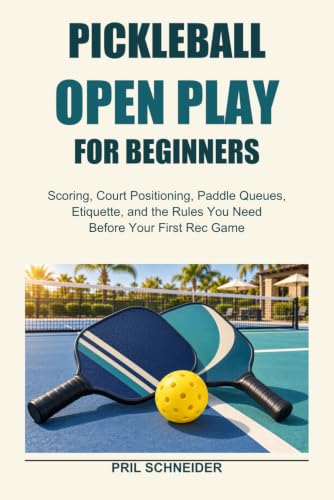
| Pickleball Open Play for Beginners | First-timers who want the rules before they show up | Title covers scoring, court positioning, paddle queues, etiquette and rules for a first rec game | Check Price on Amazon |
| Pickleball Metal Court Sign, Pickleball Etiquette Tips | Clubs and HOA courts that need the rules posted, not explained | Metal sign, 11.8 x 7.9 inches, weather-resistant, mountable on walls, fences, posts or court surfaces | Check Price on Amazon |
| Pickleball Shuffle | Socials and clinics where strict rotation isn't the point | Box contains two decks, each with 24 action cards — one deck per court | Check Price on Amazon |
Disclosure: We earn a small commission from qualifying Amazon purchases at no extra cost to you.
As an Amazon Associate we earn from qualifying purchases. This page contains affiliate links, and we may receive a commission if you buy through them — at no extra cost to you.
As an Amazon Associate, we earn from qualifying purchases.
Last Updated: September 2026
The short answer: in most open play sessions you put your paddle in the queue rack or line, wait for your group of four to reach the front, take the next court that opens, play the house game format, then pull your paddle and re-queue at the back. Everything else — paddle stacking, court numbering, challenge courts — is a local variation on that single loop.
Here's the thing about open play: nobody hands you a rulebook at the gate. The etiquette is unwritten, enforced socially, and the fastest way to get a cold shoulder on court 3 is to guess wrong. This guide breaks the system down step by step, then points to a few genuinely useful tools — a court-etiquette sign, a beginner-focused open play book, and an on-court card game for socials — evaluated only from their published Amazon listing information.
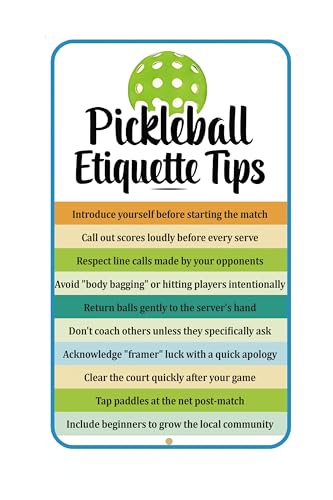
- Clear Court Identification: Professionally designed pickleball court sign helps players quickly locate and identify dedicated pickleball playing areas
- Durable Construction: Weather-resistant materials ensure long-lasting performance for both indoor and outdoor court installations
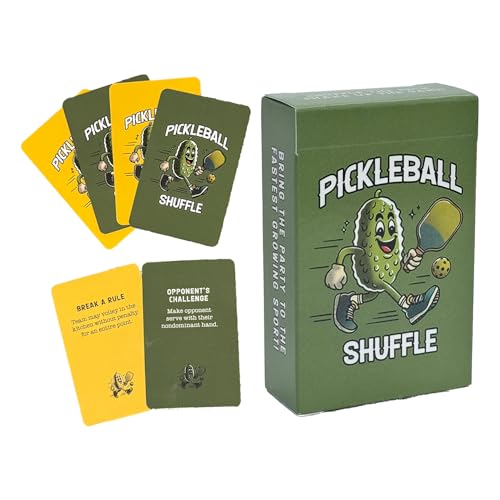
- SHUFFLE THE DECK. SHAKE UP THE GAME! Draw. Play. Shuffle it up. Pick a card, take on the challenge, and keep the game going. Simple to learn, quick to play, and never quite the
- FUN FOR ALL AGES AND SKILL LEVELS: More laughs. More connection. More reasons to play. Perfect for couples, friends, families, clubs, socials, competition and anyone who wants to
The Problem: Every Venue Runs a Different Queue
Open play means drop-in play with mixed partners. The complication is that the queueing mechanism is set by whoever runs the facility, and there is no national standard. One park uses a paddle rack with slots. The next uses a fence-hung holder. A rec center might use a whiteboard with names. A private club might run challenge courts where winners stay.
So the real skill isn't memorizing one system — it's reading the system in front of you within about ninety seconds of arriving. That means finding the paddle holder, watching one full changeover, and asking a single question before you stack anything.
What Paddle Stacking Actually Means
Paddle stacking is the practice of placing your paddle in a physical queue — a rack, a fence slot, or a literal stack on the ground — to mark your place in line for the next available court. The stack is the sign-up sheet. Order in the stack is order of play.
The common variants:
- Single stack, four off the top. The next four paddles in the stack form the next group. Fastest and fairest for mixed skill levels.
- Slotted rack by court number. Each court has its own queue; you choose which court to wait for.
- Group stacking. Four friends stack their paddles together to stay as a foursome. Some venues explicitly ban this because it breaks partner mixing.
- Winners stay (challenge court). The winning pair holds the court, two new paddles come off the stack. This concentrates the strongest players on one court, which some players love and some avoid.
How to Join a Pickleball Court Queue: Step by Step
- Find the paddle holder before you find the court. It is usually on the fence near the entrance gate or between courts.
- Look for posted rules. A permanent sign at the gate is the fastest source of truth, and it beats four different players giving you four different answers.
- Ask one person, "How's the rotation working today?" Phrase it as a question about today, not about the rules in general — sessions change.
- Place your paddle at the back. Never in the middle, never on top of a slot that already holds someone's paddle.
- Stay near the courts. If your paddle reaches the front and you're at your car, the group behind you moves up and you lose the spot.
- Take the first court that opens, not the court with the players you'd prefer.
- Introduce yourself and state your level honestly. "I'm newer, still working on my third shot" saves everyone a mismatched game.
- When the game ends, clear the court promptly. Talk on the sideline, not at the kitchen line.
- Re-stack at the back. Same paddle, same rules, no shortcuts because you just won.
Tools and Products That Actually Help
Pickleball Open Play for Beginners — Best for showing up to your first rec session already knowing the queue
If you want the rules before you're standing on court with three strangers waiting, this is the one product here aimed squarely at that problem. Its full title is Pickleball Open Play for Beginners: Scoring, Court Positioning, Paddle Queues, Etiquette, and the Rules You Need Before Your First Rec Game, and that title states the scope directly: scoring, court positioning, paddle queues, etiquette and pre-first-game rules. Check Price on Amazon
Be clear on what we can and cannot say here. The supplied Amazon record for this title contains no feature bullets, no page count, no format details and no publication information. That is a gap in the listing information supplied to us, not evidence that the book is thin — but it does mean you should check the listing page itself for format and length before buying.
Who it suits: the player who has watched YouTube rallies but has never navigated a paddle rack. Who should skip it: experienced rec players who already know their venue's system.
Pickleball Metal Court Sign — Best for clubs and HOA courts that need etiquette posted at the gate
Most queue disputes are information problems, not attitude problems. A posted sign converts "ask four people" into "read the fence." This one is described in its listing as a metal pickleball court sign carrying etiquette tips, at 11.8 x 7.9 inches. Check Price on Amazon
The listing bullets state weather-resistant materials for both indoor and outdoor court installations, bold lettering with contrasting colors intended to be readable from a distance, and mounting on walls, fences, posts or court surfaces. Read practically: at roughly the footprint of a sheet of paper, this is a gate-height sign a player reads while walking past, not a billboard readable from the far baseline.
Strengths worth noting: multiple mounting options mean it fits chain-link fence, a post, or an indoor wall without a custom bracket. Limitation to check first: the supplied listing information does not state the exact etiquette text printed on the sign, the mounting hardware included, or the metal gauge. If your facility needs specific house rules — group stacking banned, games to a set score — confirm the printed wording matches your policy before ordering.
Pickleball Shuffle — Best for socials and clinics where the goal is mixing, not strict rotation
Not every session should run like a queue. For a club social, a clinic warm-up or a family event, rigid rotation is the wrong tool. The listing for Pickleball Shuffle describes a deck of action cards played during a traditional pickleball game, and states that each box contains two decks with 24 action cards each — one deck per court. Check Price on Amazon
Two decks per box is the practical detail. It means one purchase covers two courts running simultaneously; a four-court social would need more boxes to equip every court. The listing also positions it for all ages and skill levels, describing it as suitable for beginners through pros.
Who it suits: the person organizing a mixer where the point is laughter and cross-level play. Who should skip it: anyone looking for a competitive drilling tool — this is a game-variant deck, and the supplied listing does not describe skill instruction or drill progressions.
Tips for Best Results
- Arrive at the start of a session block. Queues are shortest when the block opens and longest 45 minutes in.
- Bring one paddle, not three. A second paddle in the rack looks like line-jumping even when it isn't.
- Call your own faults. Self-officiating is the social contract of rec play.
- Rotate serve position without argument. If you're unsure who serves, ask before the first point, not after a disputed rally.
- Match your footwear to the surface. Court shoes with lateral support are a different category from running shoes; see our pickleball shoe fit guide.
Common Mistakes to Avoid
- Stacking as a foursome where it's banned. This is the single most common source of open play friction.
- Holding a court after your game ends. Post-game analysis belongs on the bench.
- Playing well above or below the group's level without saying so. Honesty up front beats a 11-0 game.
- Retrieving a ball by walking through a live court. Wait, then cross.
- Overpowering a beginner for an entire game. Rec play is a repeat game; the person you crush today is your partner tomorrow.
- Assuming yesterday's rotation applies. Different session lead, different system.
How We Research
This site does not perform product research, and this page is no exception. Every product statement above comes from two source types: the Amazon Creators API verified product record for each ASIN, and the product listing feature bullets published on those listings, all retrieved on 11 September 2026. Where a listing supplied no bullets — as with the beginner open play book — we say so rather than filling the gap from memory. The etiquette guidance itself reflects widely used open play conventions and is offered as practical advice, not as a cited standard.
Frequently Asked Questions
How do I join a pickleball court queue as a total beginner? Find the paddle holder near the gate, check for a posted sign, ask one player how rotation is running today, then place your paddle at the back of the stack and stay near the courts.
Can my friends and I stack our paddles together to play as a group? At some venues yes, at others it's explicitly banned because it defeats partner mixing. Ask before you do it — this is the most common etiquette flashpoint in open play.
Should the winners stay on court? Only if the venue runs challenge courts. In a standard single-stack rotation, all four players clear the court and re-queue regardless of who won.
Is there a book that explains open play rules before my first session? The title Pickleball Open Play for Beginners: Scoring, Court Positioning, Paddle Queues, Etiquette, and the Rules You Need Before Your First Rec Game states that it covers exactly that ground, though the supplied listing record includes no feature bullets or page count.
How can a club reduce rotation arguments? Post the rules physically at the gate. A metal court sign with etiquette tips, sized at 11.8 x 7.9 inches, gives every arriving player the same answer without needing a volunteer to explain it.
What if I want a social session instead of strict rotation? A card-based game variant changes the format entirely; Pickleball Shuffle's listing describes two decks of 24 action cards, one deck per court, played during a traditional pickleball game.
Final Verdict
If you're a new player, the highest-value purchase here is the beginner open play book — its title alone commits to covering paddle queues and etiquette, which is precisely the knowledge gap that makes first sessions uncomfortable. Buy it, read it before you go, and check the listing page for format details the supplied record doesn't state.
If you run a facility, the metal court sign does more per dollar than any conversation you'll have, because its weather-resistant construction and wall, fence, post or court-surface mounting options mean you install it once and it answers the same question forever. Verify the printed wording matches your house rules first.
And Pickleball Shuffle is a social product, not a rotation product. Two decks per box, 24 action cards each, one deck per court — useful for a mixer or clinic, irrelevant on a busy open play morning.
Related Resources
- Beginner pickleball paddle buying guide
- Pickleball shoe fit guide
- Portable pickleball net setup
- CPSC consumer product safety information: cpsc.gov
- Consumer protection resources: usa.gov
Sources & Methodology
Nothing on this page was physically or laboratory-tested — this site owns no courts, no paddles and no lab, and no one here handled the sign, the book or the card deck. What was done instead: each ASIN's Amazon Creators API verified product record and its published listing feature bullets were read closely on 11 September 2026, and every specification quoted above traces back to that exact listing text, with gaps named as gaps rather than guessed at. For a category like this — printed signage, a book and a card deck, where the buying decision turns on stated coverage, dimensions and component counts rather than on durability under load — listing-level evidence is genuinely enough to choose between them, provided you confirm the sign's printed wording and the book's format on the product page before ordering.